
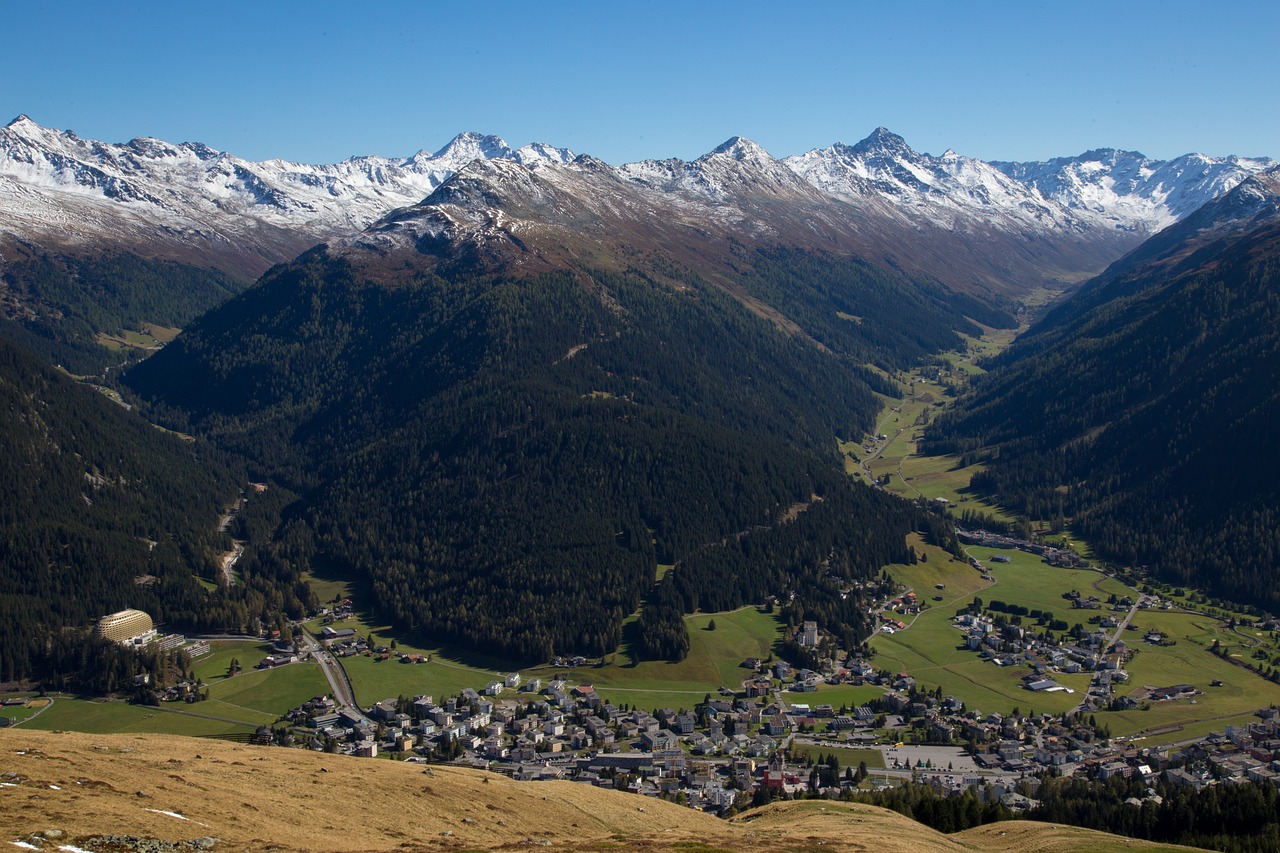
I’m reading Thomas Mann’s The Magic Mountain again (the translation by H.T. Lowe-Porter). It’s over 700 pages long and I’ll blog about it as I progress slowly through it.
Thomas Mann justifies the length of his work by saying: “When did a narrative seem too long or too short by reason of the actual time or space it took up? We do not fear being called meticulous, inclining as we do to the view that only the exhaustive can be truly interesting.” I do think it’s Mann’s attention to detail that make his descriptions so vivid and makes the scenes in this novel still stick in my mind years after the first time I read it.
The question of time and space is a major theme of the story itself, and you begin to see this even on the first few pages. Hans Castorp is travelling by train to a clinic in Davos in Switzerland, and we’re told that, the further he gets from his home in Hamburg in Germany, the more dramatically he is transformed:
“Space, rolling and revolving between him and his native heath, possessed and wielded the powers we generally ascribe to time. From hour to hour it worked changes in him, like to those wrought by time…”
Time causes forgetfulness; we need time to get over grief, to forget an embarrassment or insult, to put a failed relationship out of mind. Space has a similar effect in that it tears us away from the things that would otherwise have remained in our minds by virtue of being present to us every day. Time plus space is usually the best thing if you want to forget, but the narrator of the story is suggesting here that space, all on its own, is having a magical effect on Hans. Just by virtue of removing himself from home and placing himself on “the magic mountain,” he’ll find himself immediately under its spell, forgetful of everything “down there” in the real world as if he had already been here for years.
He gets off the train and his cousin, Joachim Ziemssen, is there to meet him. Joachim explains that time moves differently on the mountain:
“They make pretty free with a human being’s idea of time, up here. You wouldn’t believe it. Three weeks are just like a day to them. You’ll learn all about it.”
When I read this the first time around I was already hooked: this modernist work of literature was already promising strange philosophy, mystical knowledge, and occult secrets. On second reading I’m no less excited to continue and relive the magic of the strange world on the mountain.


 Lee Watkins