The Politics of Eternal Winter

Sometimes things can happen that make you think: the world has become a terrible place. But I think it’s refreshing to remind yourself that things got really bad a long time ago.

We’re all familiar with some version of the “Ages of Man” from ancient Greek mythology: there was a golden age in which people were happy and free and never aged; then came a silver age worse then the golden; then came bronze, which was worse still; then iron.

In Robert Graves’ retelling of the myth, the golden human beings personally knew the gods, to the extent that Alalcomeneus, the first man, was tutor to Athena and marriage counsellor to Zeus and Hera. That’s how great the first human beings were: made in the gods’ image, they were more or less gods themselves, having powers enough to lend the gods assistance.

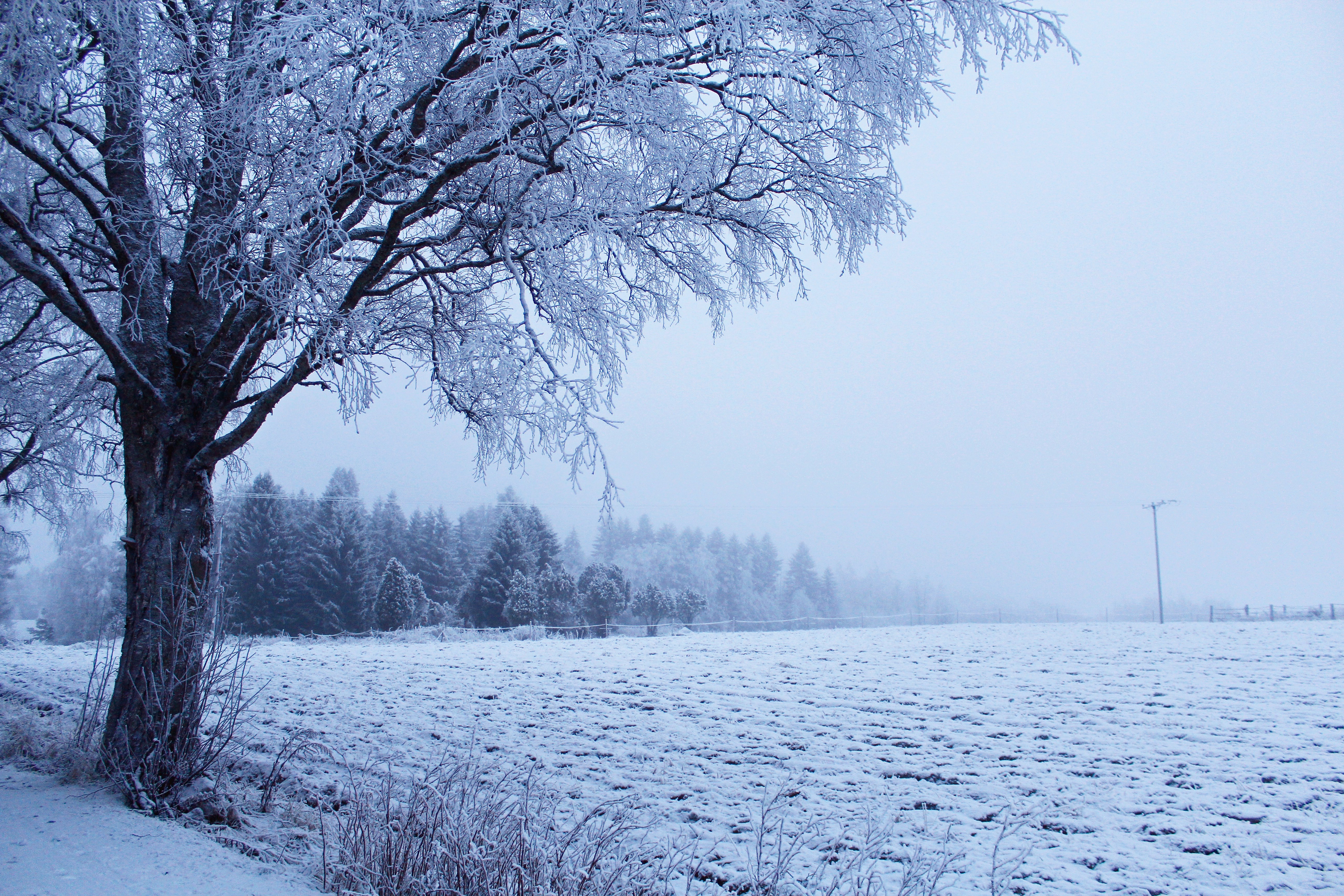
Ovid tells us that what characterises the golden age is that people did what was right and just without being forced to do so; there was no need for law. There was also no need for moats and fortifications, city walls, armed guards… What was it allowed this peaceful coexistence? It was the fact that there was plenty to go around. No one could feel any need to fight for land or resources, there being plenty of fruit falling from the trees, clear water to drink… And it was always spring, meaning there was never any bitter cold to shelter from.

Ovid has it that it was the fall of the Titans and the new reign of the Olympian gods that ended the golden age. For some reason, Zeus decided to divide the year into four seasons, which forced human beings to seek places to shelter for part of the year, and created the need to store up supplies to get through the winter months. Demeter had to teach mortals the secrets of agriculture so that they could produce enough food to store away through the unforgiving months.

Photo by Minna Autio on Unsplash

It seems odd that Zeus would just decide to divide up the year and make things worse. Bad PR for Zeus, but perhaps the true story makes him look even shoddier. In truth, the seasons came into being because Zeus allowed his brother, Hades, to kidnap Demeter’s daughter, Persephone, and take her down to Hell. Demeter went to Zeus for help but Zeus pretended not to know where Persephone was, and so Demeter had to search on her own. All the while she searched, she did not attend to her divine duty of making sure the trees produced fruit and that mortals had enough to eat, and that was the first winter on Earth. Too late, Zeus realised he had to step in and help Demeter, else her misery would cause human beings to be wiped out forever.

So Zeus tells her that Hades has Persephone and Demeter goes and gets her daughter back. Only, Persephone is by now enchanted by Hades’ magic, and in love with him, and though she returns to earth with her mother, for half of every year she goes back down to Hell to be with her husband. And all the while Persephone is gone, Demeter mourns and there is winter on Earth.

So winter exists because Zeus allowed his brother to commit a terrible crime, and he tries to spin it to look like it was an executive decision.

In monotheistic religions, believers sometimes like to say that any evil that occurs is part of “God’s plan.” Well we see Zeus is trying to pull that one too, by pretending there is some great divine wisdom behind the concept of winter. But no: he made a mistake. And being the world’s first politician, he’ll never apologise for a mistake.

And since he won’t admit a mistake was made, and instead he’s pretending that winter was a great idea of his, he’ll never try to fix the situation either.

As human beings we’re in the same position now as the gods were back then. We see around us winter: misery, poverty, war… And we pretend that this is somehow the best of all possible worlds rather than a situation we’ve fallen into through a series of cosmic errors. We pretend that wars are justified, and that poverty for half the world is just the way of things. Sound economics, or all part of God’s plan. Instead of making excuses for the winter which we’ve made for ourselves, why not decide it’s time for spring? There’s plenty to go around and there’s never any excuse to provoke violence. But the PR folks will always try to spin it that somehow destruction and scarcity are all for the best.

Posted in Mythology | Tagged , , , , , | 4 Comments

Rushing Ahead

A paradox: standing around waiting is a kind of rushing ahead. Though the queue barely crawls forward, your mind is rushing ahead to the future, consuming every present moment greedily as if to move more quickly towards the anticipated event. The queue is of no interest to you; you just want to go in and enjoy the concert. And of course the future event, when it arrives, will become just another present moment, to be greedily consumed as fast as all the previous ones were. The concert turned out to be just a pleasant blur of sights and sounds, becoming one long moment to be consumed in one bite.

Hans Castorp is in love, and so of course he is happy to consume every present moment that isn’t spent with her, in his hurry to see her again. And then their meeting is over in a flash. It’s a foolish way to live, because all anyone has is the present moment. It’s foolish to squander everyting you have. But love makes a person foolish.

The narrator of The Magic Mountain tells us that a person who is awake is more moral than one who dreams. Thomas Mann means this literally; we do wild things in our dreams that we would never contemplate in real life. But it also reflects the “reality” of the magic mountain itself, a dreamlike reality where ordinary morals seem suspended, as people carry on their affairs and become indifferent to the deaths of other patients. Hans Castorp takes advantage of this dreamlike looseness of the mountain as he pursues his affair; the only person who can break the spell is the rationalist Settembrini, who questions Hans’s ideas. Hans is beginning to find Settembrini’s clarity of thought to be a real source of discomfort.

Hans talks to Settembrini about getting “used in time to not getting used,” which means getting used to the fact that a situation is intolerable. A paradoxical way to describe a sensible idea: if you can’t change something you feel is intolerable, what are you going to do but eventually accept it? Perhaps Hans is talking about his own affair when he says this; if every present moment is intolerable, perhaps it makes some kind of sense to gobble them all up quickly to arrive at the one moment of peace every week that love brings. Hans has found a solution to the problem of the intolerability of the moment. Settembrini shakes his head at Hans’s carelessness of time, but Mann makes sure that his readers can see the logic of it.

(I’ve been reading H.T. Lowe-Porter’s translation of Thomas Mann’s The Magic Mountain.)

Posted in books, Classic Books Revisited, Literature | Tagged , , , , | Leave a comment

Time to Think Things Over

Now that Hans himself has fallen ill, time moves differently. Every day is the same and it’s as if a single day has stretched out to become one impossibly long day. There’s not much difference between day and night when you are forced to spend all of your time resting in bed.

Photo by Gabriel Tenan on Unsplash

He has a lot of time to think. He’s always taken a serious attitude towards life but now he’s rethinking all that. What seemed important “down there” in “the flatland” doesn’t seem so important here. His fellow resident Settembrini still holds on to, and speaks at length about, notions of “progress” and “freedom,” but Hans seems to have been lulled somehow by the magic of the mountain, causing him to question the importance of these things. Settembrini is a windbag who takes himself too seriously.

Joachim points out that they just can’t know when they will be well enough again to return to life below. Hans sees that his cousin means this in a pessimistic sense, but “I don’t know” is really a neutral thing to say; if we really don’t know then it might be sooner than we expect. Hans is beginning to embrace neutrality towards things as everything in life seems to become less and less serious. You might say he’s becoming more cheerful.

It’s not just that he’s neutral in his expectations; he’s neutral towards the outcome too. He’s starting to take a neutral stance towards time itself, so that whether it’s seven weeks, months, or years that he spends up here, it will be all the same.

The magic of the mountain has the same effect on Hans as a disease; the mountain is a place of both magic and disease. Hans has granted himself all the time in the world to think things over, to reassess his life, and if external factors don’t eventually intervene, perhaps he’ll spend the rest of his life just contemplating the various possibilities of the life he might have lived below.

(I’ve been reading H.T. Lowe-Porter’s translation of Thomas Mann’s The Magic Mountain.)

Posted in books, Classic Books Revisited, Literature | Tagged , , , , | 1 Comment

Magic and Reason on the Mountain

Here on the magic mountain, the seasons get all mixed up. Hans can’t believe that on the third day of his visit, after days of hot sun, suddenly there is cold and snow. Joachim explains to him: yes the seasons work differently here; every month, January to December, has a bit of snow, a bit of summer sunshine. You get all the seasons here, but not in the usual order.

Image by chriszwettler from Pixabay

Rather than making things exciting, not knowing what the weather will be like one day to the next in fact creates a kind of monotony; every month, with its identical mixture of summer and winter days, is the same as every other. All this adds to the illusion that time passes strangely up here, or doesn’t pass at all.

Hans is still resisting the pressure to take up the ways of the inmates here. He will get himself some extra blankets to help fend off the cold, but he won’t get one of the “sacks” that everyone else has here. If he buys some blankets he can always take them home with him, but a fur sleeping sack would be a strange thing to have down below, being an item that seems uniquely fit for the purpose of living up here on the mountain.

It’s not just Hans who resists the magic of the mountain. Settembrini, a resident here, is always complaining about the strange rules and practices of this place. He openly defies the doctors here, doing as he pleases in many regards. For example, he skips the doctor’s Sunday lectures; Settembrini doesn’t need instruction from someone like him. While the doctor engages in bizarre, occult theories, Settembrini is a rationalist who believes in science and progress.

But it’s the doctor who thinks himself the practical one and the man of science. His lecture is all about conscious drives and what happens when they are suppressed; it sounds like it is very much informed by Freudian psychoanalysis. Of course, a lot of people today are very sceptical about Freud, his ideas being no longer at the cutting edge, and so perhaps Settembrini is ahead of his time.

Another character, a brewer who Settembrini happens to talk to, says literature is just about “beautiful characters.” Settembrini, a man of letters, cannot agree. If literature were just about making pretty stories then a rationalist like Settembrini would have no interest in it. For Settembrini, art is a serious pursuit in direct opposition to the foggy-mindedness encouraged on the magic mountain, as he will explain at length if you’ll let him. After their conversation, Hans is still confused about what Settembrini thinks the point of literature is if not “beautiful characters”; he thinks it must be “beautiful words.” But I think it’s clear to us, as readers, that this can’t be true either; that would still be too shallow a concept of literature. The clue to Settembrini’s actual belief can be found in what Hans says next, when he calls Settembrini a “born objector,” in other words a complainer; the whole point, not just of literature but of a rational existence of any kind, is to question things, to tear holes in reality and make the world new and better by revealing what possibilities lie beyond, through the gaps that we create. Why passively accept things as they are? In an imperfect world, we should be open to new possibilities, and so it’s rational to make the attempt to create new stories for ourselves.

(I’ve been reading H.T. Lowe-Porter’s translation of Thomas Mann’s The Magic Mountain.)

Posted in books, Classic Books Revisited, Literature | Tagged , , , , | Leave a comment

A Cigar is Just a Cigar

On the “magic mountain,” what once seemed serious to you will become trivial. Death, for example: Joachim thinks that illness and death might “just be a sort of loafing about” and nothing really to worry about. We’re born, we live our lives, and then we get eternity to just lie around. And what’s eternity, here on the magic mountain? If “time” doesn’t mean anything here then neither does “eternity.”

Hans Castorp says: first you are interested in something, and then comes understanding of it. The people here on the mountain become uninterested in time and death; it’s engineered that way, since when a person dies at the clinic it’s all kept very quiet so as not to shock anyone. Losing interest in these big themes, understanding of them dies off too; the anxieties of life “down there” become incomprehensible to those of us up here on the mountain. But a lack of interest in one thing means that attention is focused on something else. As interest is drawn away from the bigger things, it becomes directed towards the trivial. Hans is thinking about his cigars and the meal he just ate and perhaps soon he’ll come to some interesting conclusions.

Cigars don’t taste good up here, says Hans. That bothers him. A trivial concern but we get the sensation that it points to something bigger, and we’ve got another 600 pages to learn what it is. Hans will surely soon learn to live without his cigars; just one of the many changes that can occur up here. A trivial change, but important and serious enough to Hans. Though his focus is on a plain old cigar, he’s pondering the meaning of it, of this change in his appetite. He is still clinging on to the notion that something big and essential lies behind mere appearances.

Image by Erwin from Pixabay

Isn’t this a lot like how it feels to be a writer? The big themes are pushed aside once you get to the business of actually trying to tell a story. The writer tends to focus on the everyday and the ordinary. If it’s not ordinary then who will relate to it? The trick of good writing seems to be to make the big themes shine through the little things.

Joachim says: “lately” to refer to a thing that happened eight weeks ago. He mocks Hans for his fussy precision when it comes to talking about time. It seems to me that Joachim is far from where an artist would want to be: he is wholly focused on the ordinary and immediate, and the big themes are lost to him. It is Hans who is more the artist at this point, though by profession he is an engineer; it’s through his artist’s eye that we see the events of the story; as a new guest at the mountain, as an outsider, he still stands between the serious and the trivial, seeming almost to find the secret of time, transformation, and death – all in the strange taste of a once familiar cigar.

(I’ve been reading H.T. Lowe-Porter’s translation of Thomas Mann’s The Magic Mountain.)

Posted in books, Classic Books Revisited, Literature, Writing | Tagged , , , , , , | Leave a comment

Return to the Magic Mountain

Image is from Pixabay

I’m reading Thomas Mann’s The Magic Mountain again (the translation by H.T. Lowe-Porter). It’s over 700 pages long and I’ll blog about it as I progress slowly through it.

Thomas Mann justifies the length of his work by saying: “When did a narrative seem too long or too short by reason of the actual time or space it took up? We do not fear being called meticulous, inclining as we do to the view that only the exhaustive can be truly interesting.” I do think it’s Mann’s attention to detail that make his descriptions so vivid and makes the scenes in this novel still stick in my mind years after the first time I read it.

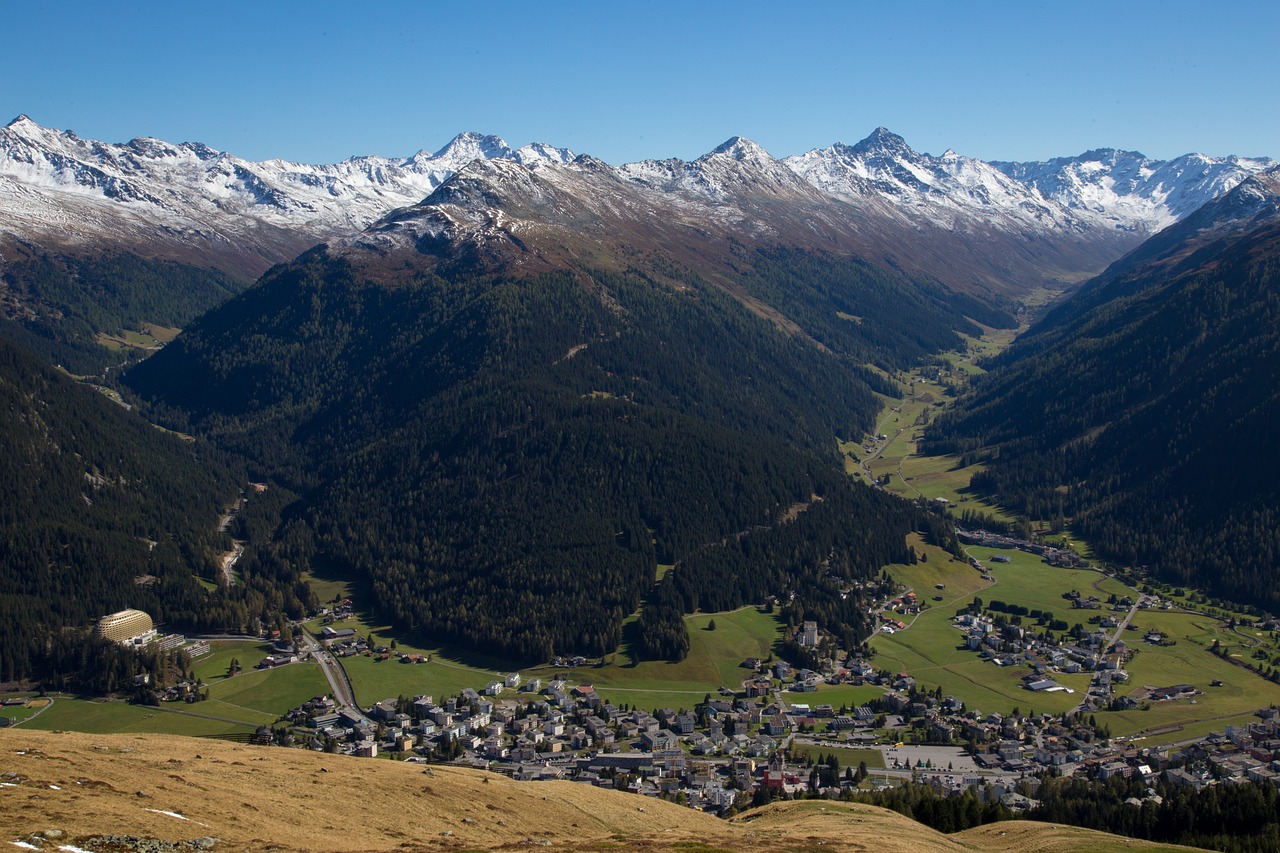
The question of time and space is a major theme of the story itself, and you begin to see this even on the first few pages. Hans Castorp is travelling by train to a clinic in Davos in Switzerland, and we’re told that, the further he gets from his home in Hamburg in Germany, the more dramatically he is transformed:

“Space, rolling and revolving between him and his native heath, possessed and wielded the powers we generally ascribe to time. From hour to hour it worked changes in him, like to those wrought by time…”

Time causes forgetfulness; we need time to get over grief, to forget an embarrassment or insult, to put a failed relationship out of mind. Space has a similar effect in that it tears us away from the things that would otherwise have remained in our minds by virtue of being present to us every day. Time plus space is usually the best thing if you want to forget, but the narrator of the story is suggesting here that space, all on its own, is having a magical effect on Hans. Just by virtue of removing himself from home and placing himself on “the magic mountain,” he’ll find himself immediately under its spell, forgetful of everything “down there” in the real world as if he had already been here for years.

He gets off the train and his cousin, Joachim Ziemssen, is there to meet him. Joachim explains that time moves differently on the mountain:

“They make pretty free with a human being’s idea of time, up here. You wouldn’t believe it. Three weeks are just like a day to them. You’ll learn all about it.”

When I read this the first time around I was already hooked: this modernist work of literature was already promising strange philosophy, mystical knowledge, and occult secrets. On second reading I’m no less excited to continue and relive the magic of the strange world on the mountain.

Posted in books, Classic Books Revisited, Fiction, Literature | Tagged , , , | Leave a comment

Good Intentions

Like when I say to myself: “I’ll post to my blog at least once a month.”

Today I started reading The Decameron by Giovanni Boccaccio. It’s a collection of 100 short stories, woven into a tale about a group of people who leave Florence for a palace just outside the city in order to escape the medieval plague known as The Black Death. They don’t have much to do in their new home except enjoy themselves, and a big part of their enjoyment comes from telling stories to one another.

The first story, like most stories, has a moral to it. The moral is: good intentions are everything. God can see into your soul, and he knows if you mean it or not. Catholics pray to saints when they want help and forgiveness, but how do you know which saint to pray to? It doesn’t matter, as long as you pray in the way you do for the right reasons.

To illustrate his point, the storyteller, Panfilo, tells a story of a truly evil man who became a saint. In his life he was a thief, a glutton, a murderer, and more. But on his deathbed he lies to a priest, pretends to have only committed minor sins – accidentally overcharging a customer once, cursing his mother one time – and to be deeply and inconsolably sorry even for these small lapses. Not only does the priest declare him to be absolved of his sins, but at his funeral he tells everyone what a saintly man he was in life, and soon this man is called Saint Ciappelletto.

As the storyteller points out, unless some secret act of real confession took place, then Ciapelletto was never in fact absolved of his sins and would, according to the medieval understanding of Christianity, be still now burning in Hell. God has the final say over that. But it is in the hands of mortals to decide who is and is not considered a saint, and Ciapelletto, through his deceit (so the story goes), managed to become one. Why wouldn’t God provide a sign that Ciapelletto was no saint after all? Why let an enemy of God be considered holy? The answer is: because it doesn’t matter. All that matters is that those who pray to Ciapelletto, or to any saint, do so with pure and faithful hearts.

In the story it is a man, the priest, who decides on the saintly status of Ciapelletto; so in history it has been human beings who decide on the laws of religion. Did God guide them in these choices? Perhaps. Or perhaps it’s all the same to God what rules people set up in his name. Some of these rules no doubt help human beings find peace and purpose and become better people; others less so. But the real thing of interest to God, if he exists, would be the human soul. And there are billions of those, each one infinitely different from every other, and each one responding in their own unique way to the fancies and follies that they find in the world as a whole. How could there be only one path to salvation? Why need there be if God is good and infinite?

Posted in Literature | Tagged , , , , , , , | Leave a comment

A Modern Hero

In Arthur Machen’s The Hill of Dreams, Lucian writes a book, submits it to a publisher and, after an agonising wait, receives a rejection. Some time later his book is published – under the name of another author. Lucian’s work has been stolen.

Faced with this injustice, Lucian has two options: to confront the wrongdoers and seek justice, or to resign himself to his fate.

His father urges him to do the first. This is the way of the world and its law. Those who break the rules should be punished, and the victims should be compensated. The rule that’s been broken here is: a person should be paid fairly for the useful work they do.

But Lucian seems to think the whole thing is hopeless. He despairs, sinking into dark thoughts of contempt for the whole human race. The real law of the world is: those who cheat and steal get by, while good people are robbed and defrauded. The list of recently published books seems to justify his contempt for our species: what sells is not really literature; he wants to create art but artists, creators of new and daring experiments, will always be pushed to one side in favour of what is popular, because what is popular will sell.

And then Lucian’s view of the world brightens. Still he is resolved to do nothing to seek justice, but he resigns himself cheerfully. “They’re not worth the powder and shot,” he says. Instead of brawling with his fellow humans, he’ll get to work on something new. That book he wrote wasn’t as good as it could have been anyway. I’ll put all my energy into writing something that’s really worth stealing.

I find Lucian both admirable and infuriating in this moment. As a reader I want justice to be done, even in fiction. But there’s something noble about rising above things like this. It really looks like Lucian has made the right choice: to resign himself to fate so that his energy might be spent where it will be most productive.

But turning the other cheek has its consequences. Whether melancholy or cheerful, such resignation to evil deeds puts you outside the bounds of society, makes you somewhat “inhuman.” When you allow evil to be done, where you could have prevented it, you say: let society rot. Lucian’s high-mindedness, though cheerful, still amounts to a contempt for his fellow human beings. And locked away, trying to write his masterpiece, he finds himself more isolated than ever.

What would have happened had Lucian pursued justice? He is probably right: nothing would have come of it, and he’d simply have been laughed at. Those who stole from him were more powerful than he. But it would have been a heroic act; it would have made him the main character in a story with conflict and drama. And Machen didn’t see Lucian this way. Though Lucian’s resignation is noble, it ultimately makes him someone passive, to whom things happen. And his daily efforts to write his great novel might seem heroic too – except that they are largely presented as daily waiting for inspiration, for the dreams to come, and so are also an example of passivity rather than activity. Lucian is therefore a modern hero: disillusioned and helpless in the face of a world ruled by industrious and selfish actors.

Posted in books, Literature | Tagged , , , | 4 Comments

On Poe and Writing with Purpose

H.P. Lovecraft said the genius of Edgar Allan Poe was that he expressed human sensations the way they really are. The sensations he was interested in describing were those of pain, decay, and terror.

Poe was carrying out a scientific examination of these three phenomena, studying them directly rather than relying on established literary forms; he wasn’t copying his favourite authors but was breaking new ground on his own.

Any great writer will eventually be sorted into a “tradition,” but what’s really interesting about an author is the thing they do that’s never been done before, or has never been done nearly so well or in quite the same way.

Photo by Laura Chouette on Unsplash

Poe would tend to take a single mood or impression as the basis for a story and then the tale becomes a study of that single thing. “The Fall of the House of Usher” is really a study of fear, specifically the way that fear is conjured up by the impression of a thing or person.

The story opens with the narrator catching a glimpse of the house where he will be staying and it making a horrific impression on him, with no redeeming quality at all:

“There was an iciness, a sinking, a sickening of the heart – an unredeemed dreariness of thought which no goading of the imagination could torture into aught of the sublime.”

He thinks: well, who knows why the mind will sometimes play such a trick on us? I’ll look at the house from another angle and maybe it will look better. Nope! It looks just as bad from this angle too. There’s literally nothing good to say about it. There’s something uncanny about this: it’s as if the house is objectively evil, its malignity being an essential property of it so that you can’t see the house without feeling morally sick.

The house is present at every moment of the story, the whole purpose of the piece being to describe the horrific source of fear in order to shed some light on the nature of fear itself. And what’s interesting is most good short stories written since Poe have this exact same focus of subject matter and purpose, and “paring down of incidents” so as not to distract from the object and the climax of the story, so that you’d almost think what Poe is doing is fairly unremarkable, until you remember (as Lovecraft points out) that Poe really was the inventor of the short story in its current, modern form.

(I’ve been reading H.P. Lovecraft’s The Annotated Supernatural Horror in Literature, edited by S.T. Joshi.)

Posted in books, Literature, Writing | Tagged , , , , , , , | 1 Comment

The Admonishing Stars

Imagine if the stars came out only once every thousand years, says Ralph Waldo Emerson. How people would gather to see them, and preserve the memory of them, passing down the story of the stars from generation to generation. (Imagine also there are no cameras to record their appearance…)

Photo by Klemen Vrankar on Unsplash

And yet in reality we are able to go out, or look outside, and see the stars every night. In the imagined case, we might call the stars’ appearance a “miracle.” Some might find the stories too fantastical to be believed at all. In reality we take the nightly miracle in our stride and some nights we forget to look up at all.

The stars “admonish” us, says Emerson. They are something to “revere” that is beyond ourselves. Such things can stir a soul to action.

I call myself “solitary” because I will spend a great deal of time alone, just reading and writing. But Emerson tells me I’m not really alone, because I have as company the words and thoughts of others.

“Nature” might be described as whatever is not us. For Emerson, there’s the world of “spirit,” which is the world of human souls, and there’s the world of nature, which is whatever is not human. And whatever is not human is divine.

When you’re truly alone you’re with nature, which is the same as saying “with God.”

There’s a lot of noise about whether there even is a God or gods when in fact the whole meaning of “God” can be discovered by just going outside and looking up at the stars.

In the light of day you might look back and say it’s just a metaphor; it’s all the same whether you do or not. And there’s plenty in nature to see in the daytime that might snap you back to a sense of the divine; a sense of what human beings have been seeking all through their lives for thousands of years; a sense of what I am when I am truly alone; a sense of my own self.

(I’ve been reading Emerson’s “Nature” in Selected Writings of Ralph Waldo Emerson, published by Signet Classics in 2003.)

Photo by Dawid Zawiła on Unsplash
Posted in books, Philosophy | Tagged , , , , | 4 Comments