
Hyndla

Hyndluljod, or “The Song of Hyndla,” is an Eddic poem about the giant Hyndla, the goddess Freyja, and a man called Ottar the Foolish. Hyndla is known for her great knowledge of the world and its history. Freyja wants Ottar to become less foolish and thinks maybe he can learn a thing or two from the giant. She wants to travel quickly, so she turns Ottar into a boar and rides him all the way to the giant’s cave and there’s no record of Ottar complaining about this treatment.

Hyndla doesn’t seem pleased to see Freyja but she does give Ottar the requested history lesson. It’s unclear why she agrees. Perhaps she just can’t resist showing off. The lore she recalls is rattled off quickly and is sometimes difficult to follow: Ottar’s father is Innstein, his grandfather was Alf, Ulf his great grandfather, Saefari his great great grandfather, and his great great great grandfather was called Svan. And so on, describing his mother’s side of the family too and some of the great deeds these people performed.

Despite the grand subject matter, the giant’s lecture is dry and Freyja seems to know that poor foolish Ottar isn’t going to remember any of this and so she asks Hyndla for some “memory-ale,” which is apparently a kind of drink that helps a listener remember the lore they’ve just heard from a storyteller. But Hyndla refuses them any, thoroughly fed up of her guests by now, and calls down curses on them. I’m left wondering what use this lesson can have been for poor Ottar who, since he was in the form of a boar the whole time, wouldn’t have been able to take notes.

(I’ve been reading The Poetic Edda translated by Carolyne Larrington and Norse Mythology: A Guide to the Gods, Heroes, Rituals, and Beliefs by John Lindow.)

Posted in History, Mythology, Norse Mythology | Tagged , , , , | 2 Comments

Doors

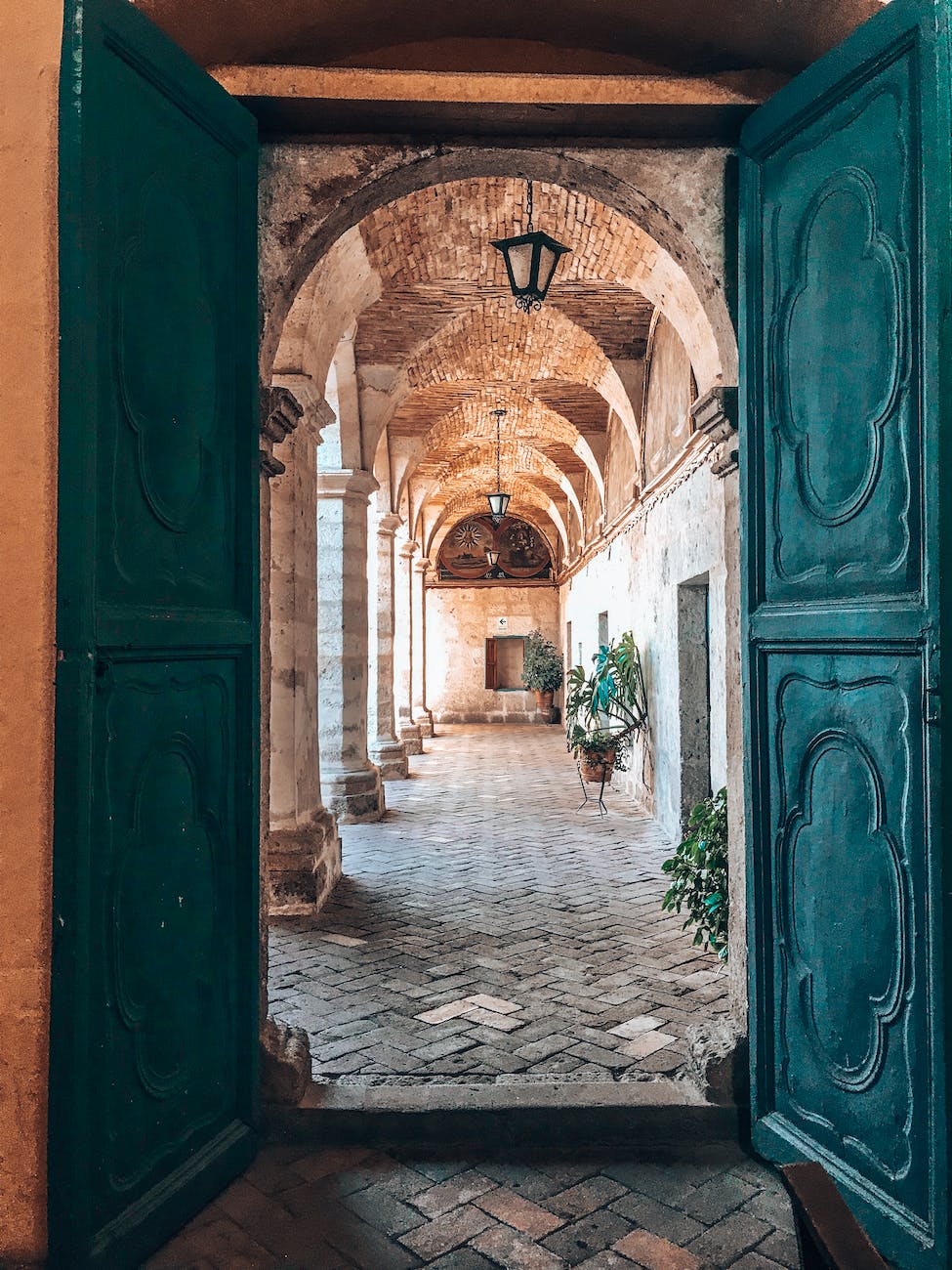
Photo by Chelsea Cook on Pexels.com

To make a short story by Kafka even shorter:

A man approaches a door and is told by the doorkeeper that he cannot enter. The door is wide open and the man thinks about just strolling through and the doorkeeper does not stand in his way. But the keeper repeats that he cannot, that entering would be a bad idea, and the man takes his word for it. Better for him to wait.

The man waits for years, and daily he is reminded that he must not enter. Daily the door stands wide open. And eventually the man grows old and soon his whole life is behind him.

The man asks: why, in all these years, has no one else come by and tried to enter through this door?

“No one else could ever be admitted here, since this gate was made only for you. I am now going to shut it.”

How many doors stand open just for you, their keepers baffled by your hesitation?

(I’ve been reading “Before the Law” in The Complete Short Stories of Franz Kafka, published by Vintage in 1999.)

Posted in books, Literature | Tagged , , , | 4 Comments

Labyrinths

For Borges a labyrinth is a place, somewhere you might find yourself, which has the quality of being infinite.

It might be a house and the house might have only fourteen rooms. But if those fourteen rooms are your whole world, if when you try to leave the house you are pelted with stones and must run back inside, if you cannot read and write and can only pass the time running from one room to the next to another or back again, then you are trapped, you cannot escape, your life has become a puzzle to be solved, a prison, and your life becomes one big problem to be endlessly struggled with.

A mirror can create a labyrinth since a mirror is a device that encourages reflection. It takes a certain amount of intelligence to recognise yourself in a mirror; it takes a little more reflection to realise that the image that looks back is not quite you after all. You look back at you looking at you and so on to infinity, and each passage back and forth alters you a little; each reflection subtly changes your own perception of yourself. It’s why sometimes you might have been told “Don’t overthink it”: the wise know that the act of thinking alters the object thought about, so that if you want things to remain simple it’s sometimes better not to think at all.

But things are never really simple to begin with and I suppose it’s this fact about the world that creates philosophers, and philosophical writers like Borges, in the first place. The question is: do all the philosophical reflections and meanderings help to clear up all the confusions or merely create more of them?

(I’ve been reading “The House of Asterion” in Labyrinths: Selected Stories and Other Writings by Jorge Luis Borges.)

Posted in Literature, Philosophy | Tagged , , , | 2 Comments

A little says a lot

“In the chair / I decided to call Haiku / By the name of Pop”

I like Jack Kerouac’s approach to haiku.

As everyone knows, haiku means a poem of seventeen syllables. But Kerouac didn’t think the syllable restriction worked well in English, so instead suggested “Western Haiku” should mean any poem that says “a lot in three short lines.”

Regina Weinreich, in her introduction to a collection of Kerouac’s haikus, gives some examples from him. One of my favourites is there: “One flower / on the cliffside / Nodding at the canyon.”

Weinreich points out that Kerouac’s approach to haiku refutes the criticism, often made of him, that he was undisciplined as a writer, that his work is careless and lacking evidence of “writerly control.” He said: “Haiku is best reworked and revised.” And Weinreich tells us that “Kerouac’s notebooks show haiku composition as a matter of discipline, as difficult to achieve as spending time in Zen meditation.”

Sometimes when my own writing is going badly, as it almost always is, I think about Kerouac and his haikus and remember that sometimes the best way to move forward is to slow down. It’s only when you stop and focus on the details that you really discover what words can do. And if you really want to write a book where every sentence “pops” you’d better take care to get the most out of every word.

(I’ve been reading Regina Weinreich’s introduction to Jack Kerouac’s Book of Haikus.)

Posted in Beat Generation, books, Literature | Tagged , , | 2 Comments

Godspeed

Photo by James Dant on Unsplash

“This day winding down now / At God speeded summer’s end”

are the first two lines of Dylan Thomas’s “Prologue.”

William York Tindall points out how the “now” and “end” stand at the ends of the lines, giving these words “weight,” and he also notes the “sinister” sense that “God speeded” gives these lines, because it makes the passage of time seem like a goodbye.

Now is the end, so goodbye.

A sombre beginning for a poem.

Seasons come and go, and there is always a touch of melancholy in seeing the end of something you have enjoyed. So Thomas is just expressing a feeling we’ve all had at the end of a summer, probably more than one, at some time in our lives. Probably a summer long ago, perhaps when you were very young, and you thought it would never end. There’s melancholy in the thought of time past and gone.

“God speeded” is particularly fitting here because not only is it a goodbye and good luck to the summer, but it emphasises the speed with which time can seem to pass. That thing we always say when we say goodbye to a time fondly: Didn’t it go by fast?

And yes, we will wish summer good luck and success on its journey when it’s time for it to go, we will look forward to its triumphant return, and we wouldn’t want anything to happen to it on its way back around to us. For all the melancholy of summers past, there’s joy in the knowledge there’ll be another.

The seasons are something easily taken for granted. Poets like Thomas shock us into noticing and appreciating the passing of things, in this case by hinting that a summer is a thing that might have a mishap on its return journey. Is “shock” too strong a word? I certainly think Thomas has done all he can to make his farewell to summer here quite striking, just two lines into the poem.

(I’ve been reading William York Tindall’s A Reader’s Guide to Dylan Thomas.)

Posted in books, Literature | Tagged , | Leave a comment

Clinging On

There’s an old man in a story by Nabokov, a terrible old man, whom the narrator makes quite sure you could have no love for – he’s lecherous, sour, selfish – but perhaps still you can feel sympathy because he is a dreamer whose dream has gone stale yet still he clings to it, a dream that “had been in his youth a delightfully exciting plan but had now gradually become a dark, passionate obsession.”

There’s a difference between passion in its purest form and the obsession it can become as time goes on, and it’s easy to confuse the two. Passion is the stuff of life, gives us vitality. Obsession might be your reason for living but at the same time it drains your life out of you, making you live only for it; it exists at your expense.

The old man clings to his shop as the “symbolic link between his dreary existence and the phantom of perfect happiness.” He’s become a spectator of his own life. He sees it as it is and as it might have been. When at night he dreams, it is like watching a film, a sentimental story that ends, as films do, by plopping the viewer back into the reality of their own life – in this case back into a dismal reality of his own making.

Nabokov makes it hard to feel sympathy for the old man perhaps so that we will look away from him in disgust and back at ourselves. What passion has become stale for you? What must you leave behind? And what must you seize now in order to live life more fully?

(I’ve been reading “The Aurelian” in Nabokov’s Collected Stories, published by Penguin Classics in 2010.)

Posted in books, Literature | Tagged , , | 1 Comment

One Life

“Always merry and bright!” is the ironic refrain throughout Henry Miller’s “The Tailor Shop.” Miller doesn’t hide the bad in those times, the dark and the grim; he doesn’t hide his own “bad heart” or the bad in the other people he spent time with. And yet the cheerful refrain rings out: “Always merry and bright!” Because you’ve got to keep your chin up, haven’t you?

As Robert Ferguson notes, Henry Miller by the end of his life was the model of the cheerful old man, “shamelessly proclaiming his happiness” and riding around on his bicycle. Old Miller seemed to know the meaning of life and was a shining example of a happy human being.

But the Henry depicted in the story of the tailor shop is a younger Henry, who has not yet found his way. He is a man in no way to be admired. Not for the things he does, nor for the way he passively allows things to happen to him. He wants to be a writer so he writes books. But he only writes them in his head, in the mornings on the way to a job he doesn’t want to do, and by the afternoon he’s forgotten everything he’s “written” and has to start over again the next morning.

But there’s no point judging him. He’s dead and gone this young Henry Miller. He died so that the old Henry Miller might live. Henry Miller the flawed human being had to make way for Henry Miller the holy man and writer.

Towards the end of the story Henry Miller laments that he only has one life: “One life! And there are millions and millions of lives to be lived.” With this lament the young man comes as close as he’ll get to the truth for many years. The truth that he would discover, and which would liberate him, was that one can and must live a million lives in one lifetime if one is to be an artist. Only in this way, by relentlessly experimenting and reinventing oneself, can the correct formula ever be hit upon. Only in this way can a vital and essential transformation ever occur.

(I’ve been reading Black Spring by Henry Miller and Henry Miller: A Life by Robert Ferguson.)

Posted in books, Literature | Tagged , , | 2 Comments

Paradox and Buffoonery

“You gotta fight for peace.”

And some in the audience must have agreed. If bad people will do bad things you’ve got to do something to stop them. But others just saw the paradox and laughed.

One of those who laughed was Jack Kerouac, who not only laughed but picked up the speaker’s hat, put it on his own head, and walked in circles around the stage.

Some in the audience laugh even harder. Others murmur in their embarrassment. All can see James Wechsler, who’d spoken the paradoxical words, insulted and red-faced. Why would Jack play the buffoon instead of responding to what he’d said? It seems dismissive and disrespectful.

But Allen Ginsberg calls Kerouac’s response “rational tempered,” and really the only one he could have given. And Wechsler would have understood that, had he been more familiar with “Zen masters and Zen answers.”

As with most debates, there’s no clear right and wrong here, so maybe it’s better not to respond. Maybe it’s better to exhibit your position and let it stand, and Kerouac decided to do that through a kind of theatrical display. And why not? After the show, everyone went home and made up their own minds, as they would have done anyway.

(I’ve been reading The Best Minds of my Generation: A Literary History of the Beats As Taught by Allen Ginsberg, published by Allen Lane in 2017.)

Posted in Beat Generation, books, Literature | Tagged , , , | Leave a comment

The Conscientious One

“I am the one I must be,” says Zarathustra. He accepts himself fully the way he is. And he walks with a carefree step. So carefree that in fact he is sometimes careless. And walking through the swamp he steps on a man lying in the mud.

The man he has stepped on is angry at first at Zarathustra’s carelessness. The big difference between him and Zarathustra is that he is conscientious. He is careful to limit himself, which is the essence of conscientiousness. He calls himself “the conscientious one” because he takes the time to know only one thing, and knows nothing at all about anything else. To know a bit of everything would be to deal in half-measures, and he despises anyone who is so careless as to do that. He’s lying in the swamp as leeches feed off him, and learning all he can about the brains of leeches. He’s taking all these pains to know the one thing he should know, and to be ignorant of everything else. He is lying here in the swamp, his ears stuffed with mud. He’s taken all this trouble. And here’s Zarathustra, not even looking where he’s going!

Yes, Zarathustra can seem careless and carefree as he dances through the world. He accepts himself and any chance encounter that might befall him. Though he treads carelessly he treads lightly. He steps like a dancer.

This is what makes Nietzsche, the creator of this heroic version of Zarathustra, a source of courage for Gilles Deleuze. Nietzsche’s Zarathustra encourages his hearers to speak from their own heart. No need to limit oneself. You can stumble out into the dark sometimes and see what you find there. Perhaps you will trip over a very interesting man lying in the mud. You can be open to these chance encounters. You don’t need to control everything.

The conscientious one says: I want to be honest. But Nietzsche further has him say: And if I am dishonest, I want to be blind to my own dishonesty. In all of us there is a point where our honesty leaves off, says Nietzsche. This man who calls himself “conscientious” is trying to persuade himself that he is incapable of any dishonesty at all.

Nietzsche seems to be saying here: conscientiousness leads to dishonesty. Conscientiousness means limiting oneself, setting limits for oneself. But you can only limit your conscious self. You can’t keep an eye on everything, and there are even things you yourself do that go on behind your back. Post-Freud, this is a familiar enough idea: you are driven by unconscious drives. The upshot is that if you convince yourself that you have set a limit for yourself, then you are lying to yourself. That is the lie of conscientiousness: that you really can be such a strict guard over yourself.

Conscientiousness wants total honesty, but such absolute honesty is impossible. The best you can hope for is to be aware of where your own honesty leaves off. (And to hope for anything else, Parkes notes, Nietzsche would call a “will to blindness.”) At least don’t lie to yourself in this matter. But the conscientious one doesn’t want this: “Where my honesty ceases, I am blind and also want to be blind.” To become conscientious you must learn to believe the lie that you are honest. Conscientiousness always means hypocrisy.

To be conscientious you must limit and censor yourself so that you hide your own dishonesty. That is dishonest.

Which is more valuable? Honesty or conscientiousness? Nietzsche makes us choose one virtue over another. It is not possible to have all the virtues, so which would you prefer out of these two?

I think that the artist always chooses honesty over conscientiousness. This is why artistic creation always involves following unconscious processes. Let them see the whole of the artist, the whole person, every aspect of the human being.

(I’ve been reading Graham Parkes’ translation of Friedrich Nietzsche’s Thus Spoke Zarathustra and Martin Joughin’s translation of Gilles Deleuze’s Negotations.)

Posted in Philosophy | Tagged , , , | Leave a comment

Waiting

Image is from Pixabay

It’s difficult to wait for something.

How many times in your life have you really had to wait? Usually if something you look forward to is happening in the future, you pass the time until then. The show is on the 12th of next month, today is the 23rd, so you’ve got about three weeks. You’ve got other things to do until then and little time to wait around. Occasionally you remember the event: two weeks, one week, three days to go. And for a moment out of time you stand in expectation, imagining the day of the event, seeing it as if you’re already there, before returning with a jolt to the present moment’s business. Apart from these moments where you stand in readiness, you’re not really waiting. You’re just passing the time as the day approaches.

But what if all you had to do was wait?

Perhaps you don’t know exactly when the day will arrive. And perhaps this thing is very important to you. An opportunity that will change your life forever. Like Christmas morning to a child, it’s all you can think about. Everything else in the world becomes jumbled and irrelevant, noise and chaos. The only thing that has meaning now is the awaited event. Do you count the hours, minutes, seconds to the end of each day?

But even this simple act of counting becomes a jumble. Your mind cannot focus on anything as immediate as seconds, or even on the present minute or hour. What day is it? All you can think about is the moment that is not here yet. It repeats and repeats, the toll of a bell from a too distant future: not yet, not yet.

What about the place where you wait? It is a dark hole in the ground, nothing more. It has no details that will register on your mind, your brain craning out too far into the void of the future for anything in the present to impact upon it.

“I can’t wait!” says the child. And what if you literally cannot? Perhaps waiting becomes impossible when all there is to do is wait, when there is nothing that can interest you in the present moment, nothing to latch onto. You have no clear idea of where you are, of time passing … And how can you be said to be waiting if time has ceased to pass? A paradoxical notion: to wait for eternity. And you start as if from a nightmare as the vertigo of that thought hits you. That here in the dark, waiting, is where it all ends.

Posted in Fiction, Philosophy | Tagged , | 4 Comments