(A Review of Sylvia Walsh’s Kierkegaard and Religion: Personality, Character, and Virtue)
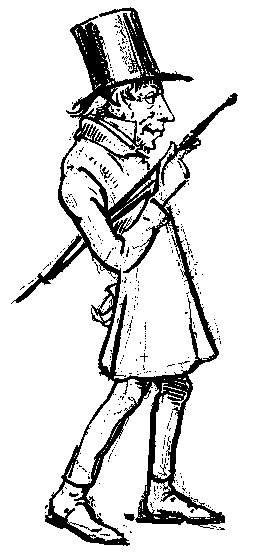
Søren Kierkagaard is a difficult thinker in more ways than one. Not only is his writing full of abstractions and speculative notions and references to Hegel, but he also makes a number of provocative arguments that can be rather hard to take. Reading Kierkegaard, you will be assailed for your complacent modern beliefs in objectivity, virtue, and individualism. Kierkegaard doesn’t care about pleasing his readers, at least not all of them. He just wants to get through to those few who stand a chance of transforming themselves into real authentic human beings.
Sylvia Walsh’s book (published 2018, Cambridge University Press) is valuable above all as a brilliantly clear account of some of the central ideas in Kierkegaard’s thought, bringing this difficult thinker to life for 21st century readers. But at the heart of this book is a purpose: to show that religion is necessary for the development of the individual. This was Kierkegaard’s central belief, and Walsh thinks it is essential to comprehend the truth of it today.
We live in a time where religion seems to have less and less significance. So Kierkegaard’s message goes against the grain. And there are other ideas in this book that pose a challenge to the popular ideas of our time. The three I’m going to focus on are:
- Personality is something that is acquired, and not everyone has one.
- You are not owed anything for your virtuous thoughts and deeds. (Which means: doing good works does not merit God’s grace – p.100)
- There is too much concern with “objectivity” in the world today.
For Kierkegaard, personality is something that was sadly lacking in the modern individuals of his day. And Walsh demonstrates that he would find the situation today no better. The modern view – and arguably even more so the postmodern – would have it that personality is something given, wholly given by the social forces that shape you. Against this view, Kierkegaard argues that having a personality is not something guaranteed at all, it is something you acquire individually and only by hard work, and is in fact something that very few people achieve in a whole lifetime.
In an age of individualism, particularly in a consumerist society, personality is taken for granted. Everyone has their dispositions, likes and dislikes, and so on. But to define an individual based on shallow traits in this way is to be too objective about things, as if an individual was just made up of characteristics that you can put into a spreadsheet. Real individuality has to do with “inwardness” – in other words with the very real subjective struggle of the individual. And the precise nature of any individual’s struggle can never be wholly communicated to anyone else.
“By a person or personality he means a solitary I or distinctive individual, which every human being is originally created to be and has as one’s specific purpose in life to become.” (2)
The reason personality is so lacking in the modern age is that people tend to neglect this realm of subjectivity, and believe that everything important is objective and empirically verifiable. There is nothing “solitary” in the modern age – nothing that cannot and should not be brought into the cold light of the public eye for scientific cross-examination – and so the idea of undergoing any kind of personal, secret, and unique spiritual trial is not something that would ever seriously occur to most people. Without an awareness of the subjective side of things, it is impossible to even become aware of the possibility – let alone the necessity – of the greatest human task: to struggle inwardly to acquire and develop a personality.
Objectivity is a big problem then, for Kierkegaard, since it distracts us from the realm of the personal, which must be taken seriously if we’re ever to undergo the spiritual trials required to develop ourselves. But before I say more about objectivity, let’s look at the concept of “merit.”
Another unpopular view that Kierkegaard holds is: no reward is owed you for your good behaviour. For Walsh, this is what makes Kierkegaard different from most virtue ethicists. A virtue ethics will usually teach what virtues it is necessary to hold in order to live the “good life”. Kierkegaard, on the other hand, does not think that it is possible to avoid either evil or suffering in this life: as a Christian thinker, he believes that we are all sinners and so cannot avoid evil except by God’s grace; as an existentialist he believes that life is an ongoing difficult task, and so suffering is unavoidable. According to Walsh, this is a point of view he shares with Martin Luther:
“According to Luther, human beings do not merit salvation at all but receive it wholly on the basis of God’s grace. Nor is divine grace earned by becoming virtuous via human agency, which in his view is enslaved to sin and can do no good on its own.” (78)
Kierkegaard does recommend cultivating a certain kind of attitude and behaviour in order to be a good Christian – “morality, inwardness, obedience, continuity, service to the unconditioned, unity of the self …” (73) – he just doesn’t think that the reason for being this way is to ensure personal happiness. Eternal happiness is, in the end, guaranteed anyway to everyone, whether they make an effort or not, since “the eternal is essentially present in every human being.” (149) And even if you are one of the few that makes an effort, the only reason you found the strength to do so was by God’s grace.
By taking merit out of the equation, God’s grace becomes something mysterious: it’s not a balance sheet of rights versus wrongs, with the total determining whether you receive eternal happiness or eternal damnation. The nature of grace is something you only get a sense of in a personal and subjective way. A secret that cannot be communicated between human beings because it does not have the objective character of a ledger of accounts.
Once again, we come back to objectivity. Reading Walsh, I get the impression that objectivity is the big issue for Kierkegaard. She tells us that Kierkegaard believed that both objectivity and subjectivity must be taken into account when thinking about how to be a good Christian, but that modern times are so biased in favour of the objective that Kierkegaard decided to go entirely the other way, in an effort to redress the balance.
For example, objectivity would include “the objective standpoints of historical scholarship and speculative thought.” Academic study, including philosophy, tends to strive for the objective: What is…? questions are looking for definitions and proofs that can settle matters once and for all. The problem with this approach is that it leads one away from faith, which Kierkegaard believes is essential to the Christian character. (45)
Subjectivity, on the other hand, means “an act of isolation” and “an essential secret that cannot be distinguished outwardly or communicated directly.” (45) Subjective truth is “an objective uncertainty, held fast through appropriation with the most passionate inwardness.” (46) You can see that Kierkegaard is emphasising an act here, a mark of character: the act of holding onto something uncertain and mysterious. Objectivity destroys the possibility of such an act by effectively making everything too easy: if you believe in God because you find it to be an objective and irrefutable truth that He exists, then you will not need to adopt the position of a person of faith, and so will lack an essential component of the Christian character.
Much is written and spoken today about the selfishness of human beings under capitalism. A common modern explanation for this is that we’re too individualistic – but Kierkegaard tells us quite the opposite. What we are lacking is real individualism. The “individualism” that we see around us is of an objective kind, based on shallow traits: likes and dislikes, and so on. Yes, human beings display selfishness, but this is because of a lack of real individuality and character, which would mean realising that material wealth has nothing to do with the highest needs of human beings. With the modern individual there’s no emphasis on “inwardness”, on the subjective struggle, on the work that every individual must do alone in order to actualise themselves as a human being. There’s good reason that inwardness is so rare, of course: as we’ve seen, for Kierkegaard the inward is a “secret” that it is the purpose of life to discover.
Walsh ends her book with some reflections on the present day:
“While differing from the modern age in some respects, the present age has seen an increase in social levelling, and a corresponding further decline in religious belief and practice. This has resulted in massive secularisation and the creation of what philosopher Charles Taylor has aptly described as a closed or immanent social and moral order dedicated to the pursuit of human happiness and individual flourishing without any sense of the presence or transcendence of the divine.” (178)
And though I am not a believer myself, I did get an overall sense from reading Walsh that in the present age we’re missing something in our secular pursuit of happiness. Kierkegaard tells us that what we’re lacking is awareness of our relation to the divine, and perhaps this is precisely it, if by “divine” you mean something personal, in other words that only you can relate to, that gives life meaning and defines you as an individual. What we’re lacking is a sense of individual meaning, when we focus on happiness too much.
And Walsh points to evidence that things seem to be going wrong: for example the growing disparity between rich and poor. It’s ironic that the kind of “social levelling” that we see today, a kind of confused belief in meritocracy, seems to be doing little to alleviate the suffering of the world’s poorest, and may in fact be making things worse.
Look around and ask yourself: does it seem that we’re focusing on what’s important? If not, then it might be worth considering that humanity lost something when it started to outgrow the concept of religion.
(Image is from Wikimedia Commons)



 Lee Watkins